
Shoulder Health for Throwing Athletes: Unlocking Your Throwing Potential
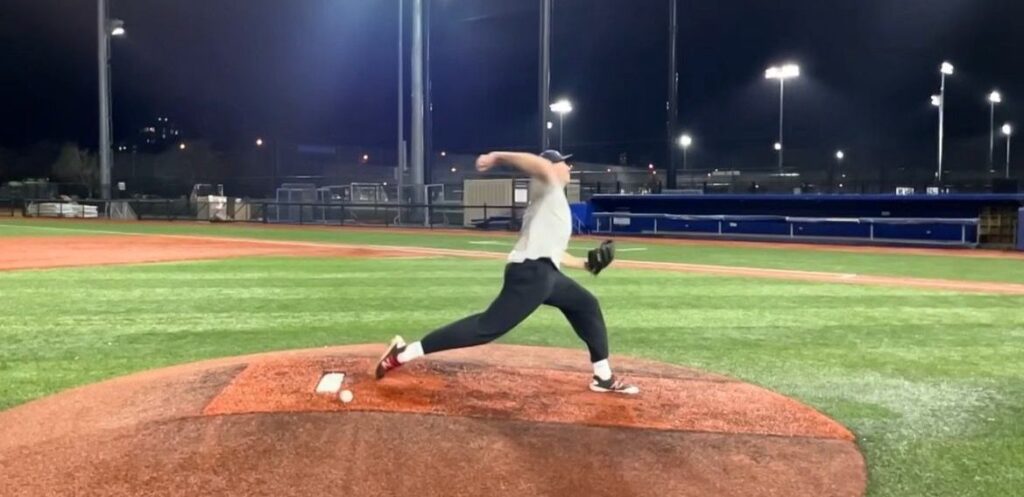
Picture this: a baseball pitcher winds up, arm cocked back in an almost impossible twist, then unleashes a 90-mph fastball with a crack that echoes across the field. Or a tennis player serving an ace, their shoulder spinning like a top at breakneck speed. For throwing athletes like these, the shoulder isn’t just a joint—it’s a high-performance machine built for extreme forces and wild ranges of motion.
As a former baseball player and now physiotherapist at Move To Move in Calgary, I’ve seen firsthand how these athletes push their bodies to the limit, and today, I’m diving into what makes their shoulder health so unique—and how to keep it thriving.
The Demands of Throwing: A Shoulder Superpower
Throwing sports like baseball and tennis demand a shoulder that can both generate and withstand incredible forces at lightning speed. This rotational joint needs exceptional mobility—especially external rotation—to deliver that ideal pitch or serve. Elite throwers often require more rotation than the average athlete, a trait honed by years of practice.
But it’s not just about mobility. Strength, power, and the rate of force development (how quickly you tap into that strength) in both internal and external rotation are critical. And don’t overlook the scapula—those shoulder blade muscles work as a biomechanical team with the joint, ensuring every throw is smooth and rhythmic.
Abnormal Adaptations: The Thrower’s Secret Weapon
Here’s where it gets fascinating. Throwing athletes adapt in ways that might raise eyebrows on a medical chart but are perfectly normal for their sport. Take this: a 2003 study of 20 elite baseball and tennis athletes found that 90% had at least one “pathology,” and 40% had full-thickness rotator cuff tears—yet 0% reported issues over five years (Connor, 2003). Mind-blowing, right? Many of these players don’t even know they have tears!
These adaptations might be part of what makes them great! Research also shows throwing arms build extra bone to handle the load (Chant et al., 2007; Yarri, 2020), and asymmetry between arms is standard. It’s like their bodies evolve into throwing machines!
What We Can Control: Smart Training for Resilience
While genetics play a role in how much rotation a thrower naturally has, training is where we can make a game-changing difference. One often-overlooked key? Training at the end ranges of motion. This builds the strength and control needed to handle those extreme positions safely.
The Physiotherapist’s Playbook for Thriving Shoulders:
1. Maximize Rotation
Develop a wide range of motion to support powerful throws.
2. Strengthen End Ranges
Target strength across the full range, not just the middle, to protect vulnerable positions.
3. Lift Heavy (Safely)
Incorporate progressive exercises like bench presses, rows, pull-ups, and overhead press with dumbbells and barbells to build a solid foundation.
4. Add Velocity
Use medball throws, landmine presses, overhead presses, and coached Olympic lifts to boost power and train the qualities needed on the diamond.
The magic happens when mobility, overhead strength, and power come together with smart load management. It’s about creating a robust shoulder that can handle the grind of a season.
The Tricky Truth: Normal Isn’t Always “Normal”
Throwing athletes are tricky patients. Those “abnormal” findings—like rotator cuff tears or bone growths—are often healthy adaptations for their sport. But here’s the catch: without expert guidance, some adaptations for throwers can predispose them to injuries which can keep them in the dugout. That’s where a Physiotherapist’s eye for detail shines, ensuring every program balances strength, mobility, and recovery.
Take Control of Your Shoulder Health
Whether you’re a weekend warrior or an elite thrower, your shoulder deserves the best care. At Move To Move, we can tailor a program just for you, blending rehab with personalized training.
Don’t wait for pain to sideline you—book an assessment to unlock your throwing potential! Email or call 587-356-2787 to schedule.
Written By Physiotherapist Nolan Berner